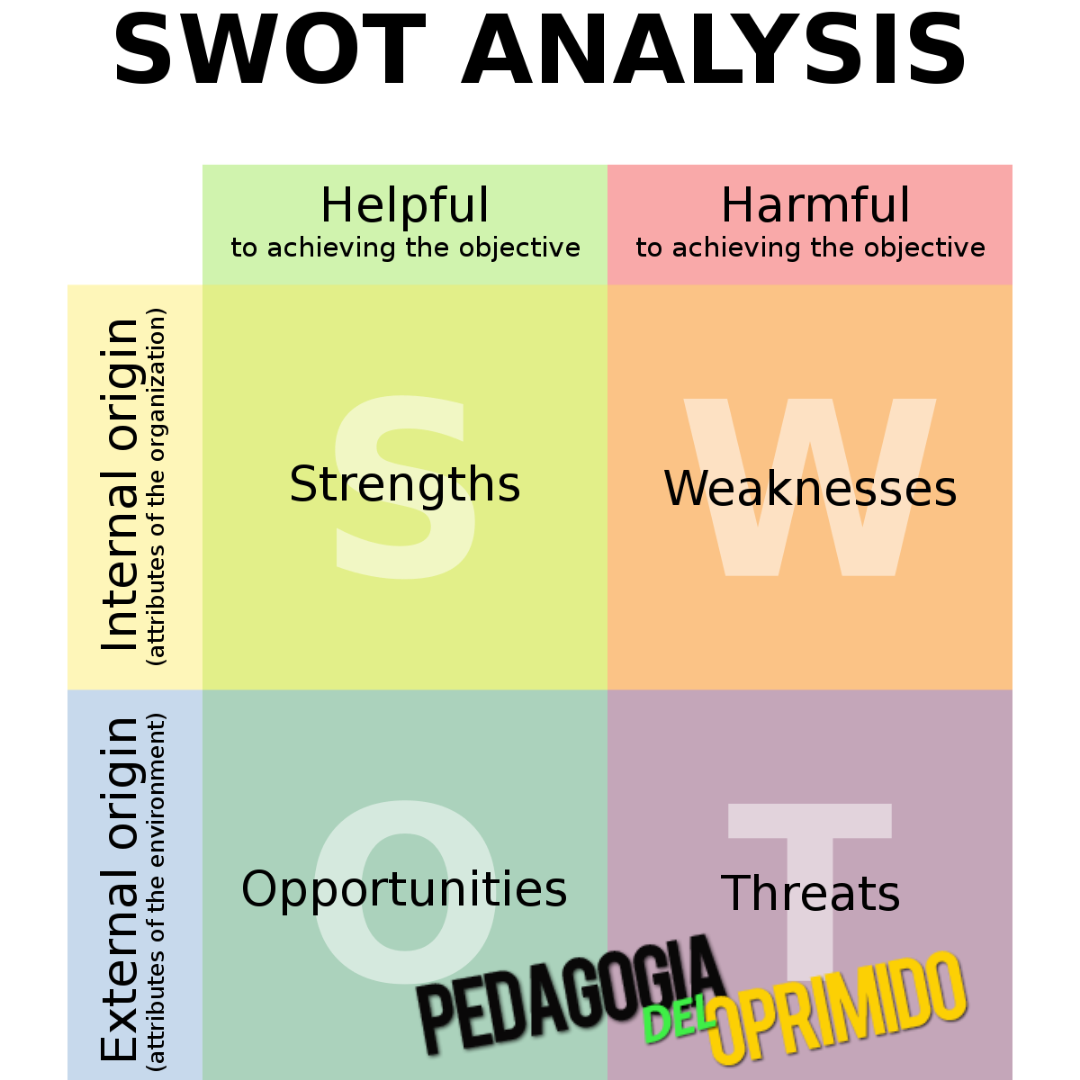
In business, the SWOT analysis matrix is usually used.
To determine a series of skills compared to competitors that may exist in the same market where they are inserted.
However, if we apply the SWOT analysis matrix to our personal lives.
We can obtain a series of benefits, such as a promotion, an increase in our income and a redefinition of our career.
What is the main objective of applying a SWOT analysis matrix on a personal level?
The SWOT analysis will help you determine what your main strengths are on a professional and personal level.
At the same time, it will help you become aware of your weaknesses.
And how you can begin to make decisions that help you transform them into opportunities.
Regardless having this knowledge about who you are and what skills you have.
Will allow you to start devising plans and projects.
That will help you achieve a significant improvement in your career.
In your personal life and in your decisions about who you want to be in the society where you live.
What are the elements of a custom SWOT analysis matrix?
In order to use a SWOT matrix, you must know each of its elements and transfer them to your personal life and career.
Let’s see what they are:
Your Personal (Internal) Strengths
Here the important thing is to understand what your most attractive and positive characteristics are on a personal level.
It is important that you be able to determine these characteristics that you consider to be your strengths.
Since if the case arises for a job interview or the possibility of a promotion, you should be able to name at least one.
For example: capacity for self-criticism, ability to work in a team, be decisive, high emotional intelligence in stressful situations, etc.
Although of course this will depend on where you work, they can help you achieve better results in an interview.
A key question here is: What strengths stand out above the rest and what can I do to keep improving them?
Your Weaknesses (internal)
Whenever we talk about weaknesses on a personal level.
In reality we are going to be talking about what are those things that you have not yet fully developed.
And are presented as areas of opportunity to enhance who you are and what you do.
For example:
- if you are disorganized, if you are late, if you are a procrastinator, if you are somewhat impatient or even a poor listener.
When you talk about your weaknesses.
You must be able to be sincere and at the same time commit to improving them once you have identified them in order to get a better job or even a promotion.
It would be interesting for you to ask yourself here:
How aware am I of my weaknesses and how many of them can I transform into new strengths?
Your Threats (external)
At this point in your analysis you should consider those variables external to you that may go against your wishes or interests.
These threats appear as risks that are more or less specific to your personal goals and objectives.
They are usually external and not under your control.
Some examples that can go against a person who is looking for a job are:
- the high cost of living in the area where they live
- the lack of time flexibility for child care
- jobs without all the benefits of the law,
- economic recession local
- high demand for profiles determined by age, etc.
The question we should ask ourselves here is: What level of risk do these threats represent for my projects?
Your Opportunities (external)
When mentioning the opportunities.
You must reach the conclusion about what things you can do to transform your strengths and weaknesses into new options for your personal, family, partner or work life.
It is key that you focus on determining what external factors can play in your favor to achieve what you are looking for.
For example, if you are a software developer, a very good way to determine opportunities in your sector is to know which programming languages are the best paid.
- Which companies are ideal for your current knowledge
- What countries value your prior knowledge
- Which companies offer best working conditions regarding your field
- What are the courses you can take to keep up to date, etc.
One question you can ask yourself is: Which of these opportunities represents a new level of personal growth for me in x amount of time?
Where to start and how to do a SWOT analysis?
It’s simple, the only thing you need to be able to apply a SWOT matrix to yourself and your career is to take a pencil and paper.
Sit alone for a few minutes and begin to make a positive self-criticism about yourself in order to arrive at new ideas about what you can do.
In less than 30 minutes you could have a couple of very detailed ideas that you can put on a sheet that you can easily divide into 4 quadrants.
Where you can start a detailed analysis of your weaknesses, strengths, threats and opportunities.
Conclusions:
A SWOT analysis is a very valid self-knowledge technique if you want to know where you stand in your life.
It will allow you to learn more about yourself in a very short time and decide what new skills you want to develop
What are the most immediate threats to your work or personal life project and begin to transform your weaknesses into real opportunities to continue growing.
Being aware of who we are and where we want to go is one of the best life decisions a person can make to define their career, their life and their destiny, don’t you think?